Two hundred and fifty-three islands
Bear Island is a village you cannot drive to
The logistics of living where there is no road
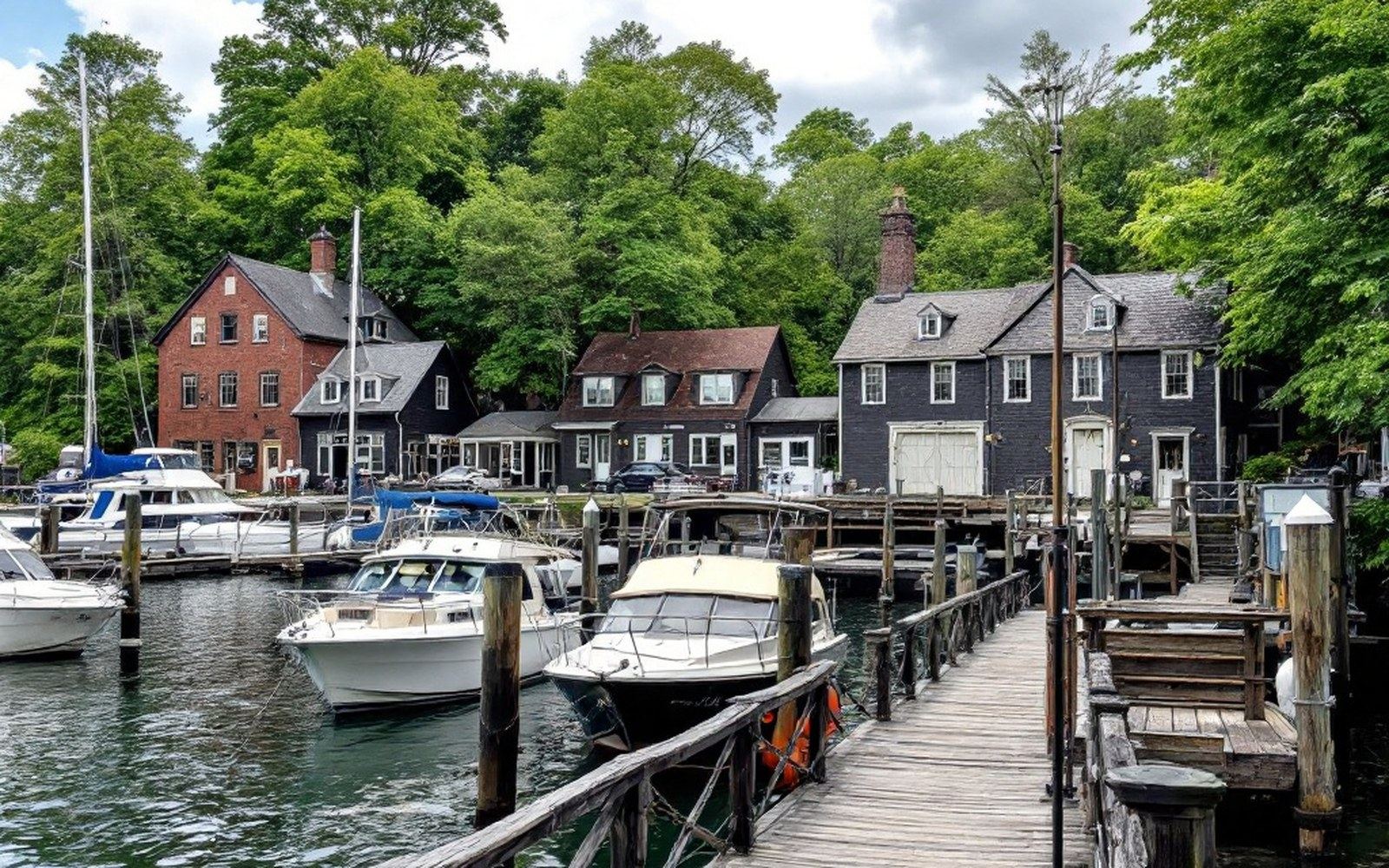
Bear Island sits in the eastern basin of Lake Winnipesaukee ↗, roughly three miles from the Meredith shore. It is one of the larger inhabited islands on the lake — about a mile long and a third of a mile wide at its widest — and it carries a genuine community: a post office, a one-room chapel, a cemetery, a small store, and enough seasonal residents that the island has its own civic arrangements for everything a paved road would otherwise provide. The state of New Hampshire counts Bear Island as part of Belknap County. It appears on the tax rolls. Mail reaches it. Propane reaches it. Everything arrives by water, or not at all.
That condition — island as self-contained logistics problem — is not a novelty for vacationers. It is the structural fact the community has organized itself around for well over a century. Understanding the island means understanding what that organization looks like in practice, and how the lake's character (shallow ledges, a hard freeze, a short open-water season) shapes every decision about getting things to and from a place with no bridge and no causeway.
What arrives by water and how
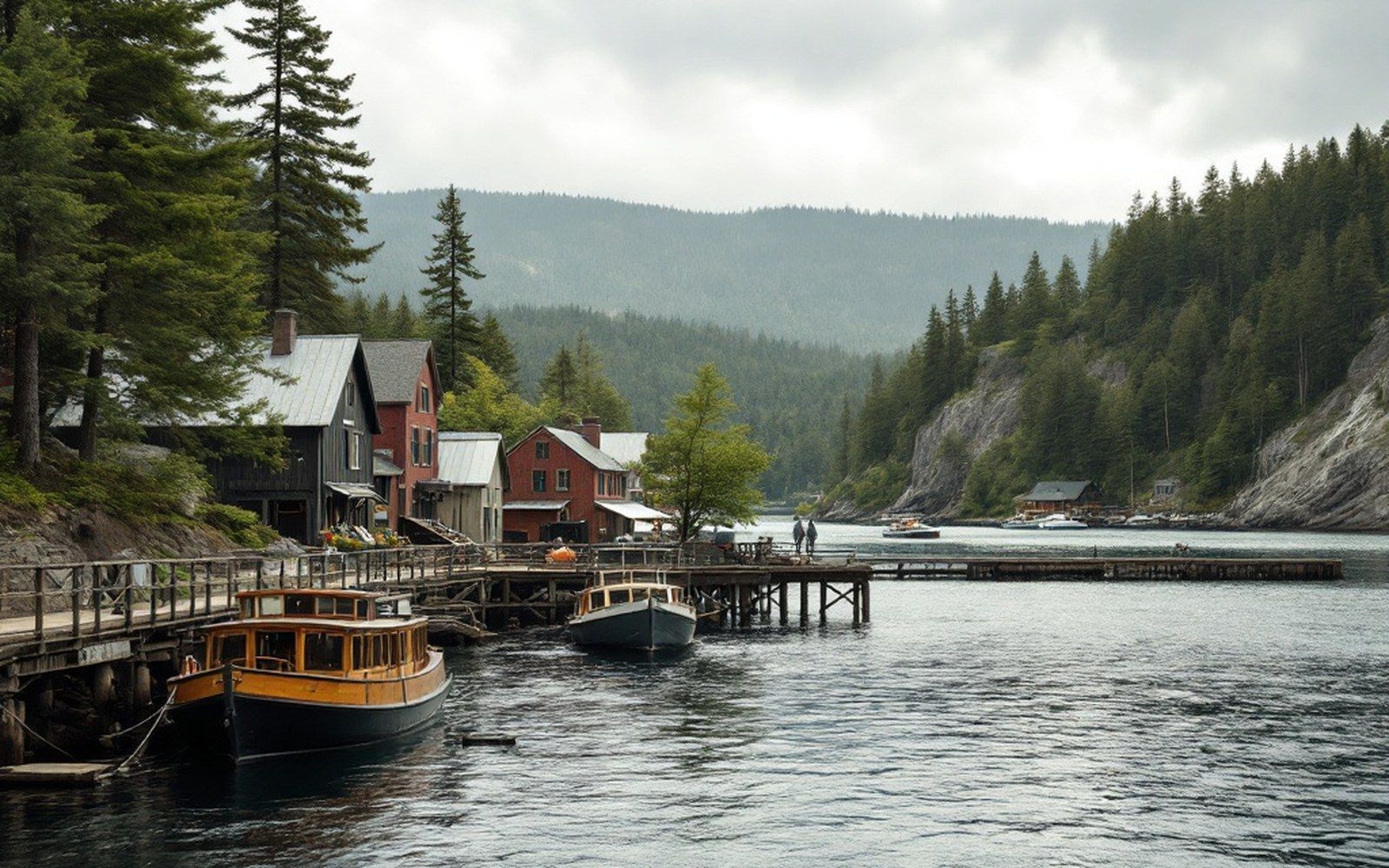
The basic unit of Bear Island supply is the flat-bottomed work boat loaded at the town docks in Meredith or at the Meredith Neck landing, depending on the season and the cargo. Fuel, lumber, appliances, groceries, construction materials: all of it is staged at a mainland dock, transferred to a vessel of appropriate size, and run across open water to one of the island's several landings. The crossing is short enough in calm weather to seem unremarkable, but Lake Winnipesaukee ↗ can build a steep chop quickly when a northwest wind comes down the main basin, and the same three-mile crossing that takes twenty minutes in August can be impassable for days in November.
The island's post office — among the handful of island post offices still operating in New Hampshire — receives mail by boat during the season, the service following the schedule of the lake rather than the road network. The postal route is a documented curiosity: it is one of the few remaining in the northeastern United States where delivery depends on water conditions. The season for mail delivery tracks the open-water period, which on Lake Winnipesaukee runs roughly from late spring to late fall, after which the island's winter residents, few in number, manage their own arrangements with the mainland.
Chronology
- Late nineteenth centuryBear Island Chapel constructed as summer population consolidated
- 1840s onwardbranch rail line to Meredith accelerates lake-region summer traffic, reframes island economy
- Pre-chapel periodcemetery markers record working-island families, ice harvest and timber economy
- Presentisland mail service, fire response and fuel delivery continue under water-access-only conditions
Propane, heating oil and other bulk fuels arrive on barge-type vessels purpose-built for the work. The same vessels serve other inhabited islands on the lake — Rattlesnake Island and the smaller privately-held parcels — but Bear Island's size and population density make it one of the more regular stops. A fuel delivery in summer requires a calm window, a tide-independent landing with enough depth, and a resident or caretaker ashore to take the hose. None of those elements is guaranteed simultaneously, which is why island households typically carry larger reserves than a mainland property of equivalent size would need.
The chapel, the cemetery and the institutional record
The Bear Island Chapel dates from the late nineteenth century, constructed as the island's summer population grew dense enough to warrant a shared gathering place. It is a modest wood-frame structure, the kind of vernacular building that appears on islands and at lakeside camps throughout the White Mountain region, and it has served continuously as a center of community life since its construction. Records held by the New Hampshire Division of Historical Resources document the chapel as a contributing element to the island's historic character; it remains in active seasonal use.
The cemetery is smaller and older than the chapel, its earliest markers predating the organized summer community and recording the names of families who worked the island rather than summered on it. The nineteenth-century lake economy included ice harvesting, timber cutting and some small-scale farming on the larger islands, and Bear Island was no exception. The graves are the most durable evidence that the island was not simply a resort destination but a working landscape before tourism reframed it. The branch line that reached Meredith in the 1840s and accelerated summer traffic to the whole lake region eventually changed what the island was for, but the cemetery predates that shift.
The island's governance is folded into the township of Meredith, which holds jurisdiction over Bear Island and several smaller parcels in the eastern basin. Property owners vote, pay taxes, and appear in town meeting records like any other landowner in the township, the only difference being that attending a town meeting requires a boat. That requirement has historically produced a self-selected civic body: those willing to make the crossing in early spring, when New Hampshire holds its traditional town meetings, tend to be those with the strongest stake in island decisions.
Logistics at a glance
| delivered by boat, seasonal, tied to open-water calendar | |
| Fuel | barge delivery, bulk reserves required; same vessels serve Governors Island, Rattlesnake Island |
| Fire response | island-based volunteer brigade; no road access for mainland apparatus |
| Emergency medical | water transfer to mainland landing required; response time is weather-dependent |
| Construction | all materials arrive by boat; single-trip discipline standard practice |
What does not arrive, and what is built around that absence
There is no fire truck on Bear Island. There is no road for one to travel if there were. Fire protection on the island has historically been a matter of bucket brigades, community organization and the kind of construction discipline that comes from knowing a loss cannot easily be contained by outside help. The island's buildings reflect this: structures are sited with separation in mind, and the community has maintained its own trained volunteers. The New Hampshire State Fire Marshal's office has documented the island's fire suppression arrangements as part of its broader survey of remote and island communities in the state, where the standard mutual-aid framework simply does not translate.
Emergency medical response follows a similar logic. A serious medical event on Bear Island requires water transport to a mainland landing and then a road vehicle to a hospital, which means the effective response time is weather-dependent in a way that no mainland community's is. That fact is part of the lived knowledge of every year-round and long-season resident. The island's seasonal population — which peaks in summer and drops sharply after Labor Day — means that the most vulnerable period for emergency response is the shoulder season, when fewer people are present to help and water conditions are less predictable.
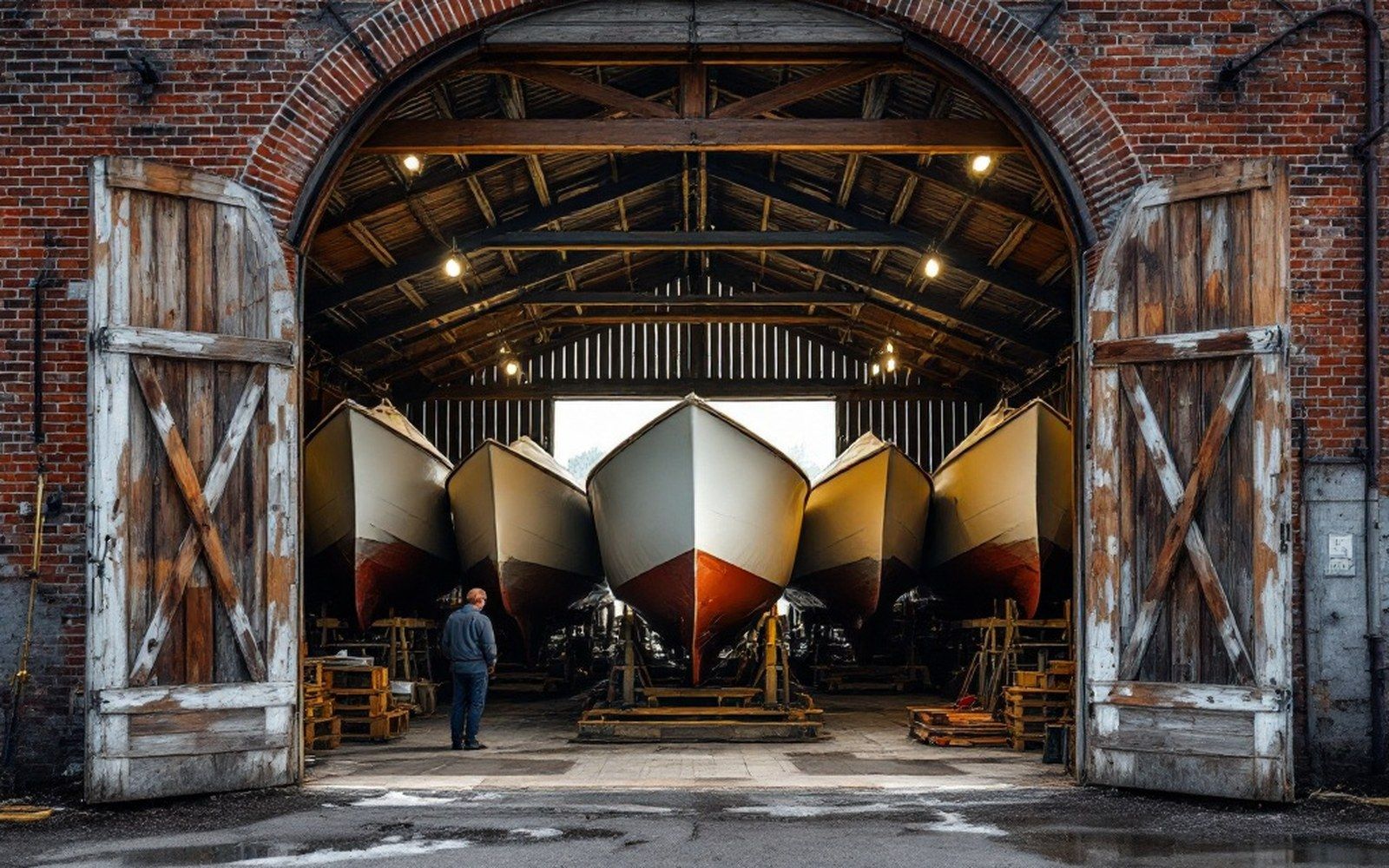
Construction on the island is its own discipline. Every tool, every bag of concrete, every sheet of plywood arrives by boat and is off-loaded by hand. There are no equipment rental yards within reach. A contractor working on Bear Island typically brings everything anticipated for the job in a single trip because a return to the mainland for a forgotten fitting costs an hour and a fuel burn. The result is an approach to building — and to maintenance — that is more conservative and more self-sufficient than mainland practice, out of necessity rather than philosophy.
What Bear Island demonstrates, taken as a whole, is that an island community is not simply a mainland community with water around it. It is a different organizational form, one that has developed its own logistics, its own civic culture, and its own approach to risk over the course of more than a century of year-round and seasonal habitation on a glacial basin ↗ that was never designed for permanent settlement. The arrangements that look eccentric from the outside — the mail boat, the volunteer fire brigade, the fuel barge — are precisely calibrated solutions to problems the island has been solving since before the first summer cottage went up.